
Hundreds of activists across the U.S. demand “U.S. Out of Korea” and “Stop the Pacific War”
Korean and Filipino organizations Nodutdol for Korean Community Development and BAYAN-USA mobilized hundreds of people in New York, San Francisco, Los Angeles, and other U.S. cities to demand an end to the U.S.-ROK alliance and escalation towards war in the Pacific.
On August 15, anti-war and progressive organizations held rallies across New York City, San Francisco, Los Angeles, Seattle, and Minneapolis, bringing together hundreds of people in opposition to the U.S.-ROK joint military exercises known as Ulchi Freedom Shield and the U.S. escalation toward war in the Pacific. These mobilizations coincided with major protests in the Republic of Korea (ROK), which saw thousands of people mobilizing across the country to oppose Ulchi Freedom Shield and the continued presence of the U.S. military on the Korean Peninsula. These rallies were a part of Nodutdol for Korean Community Development’s “U.S. Out of Korea” campaign.
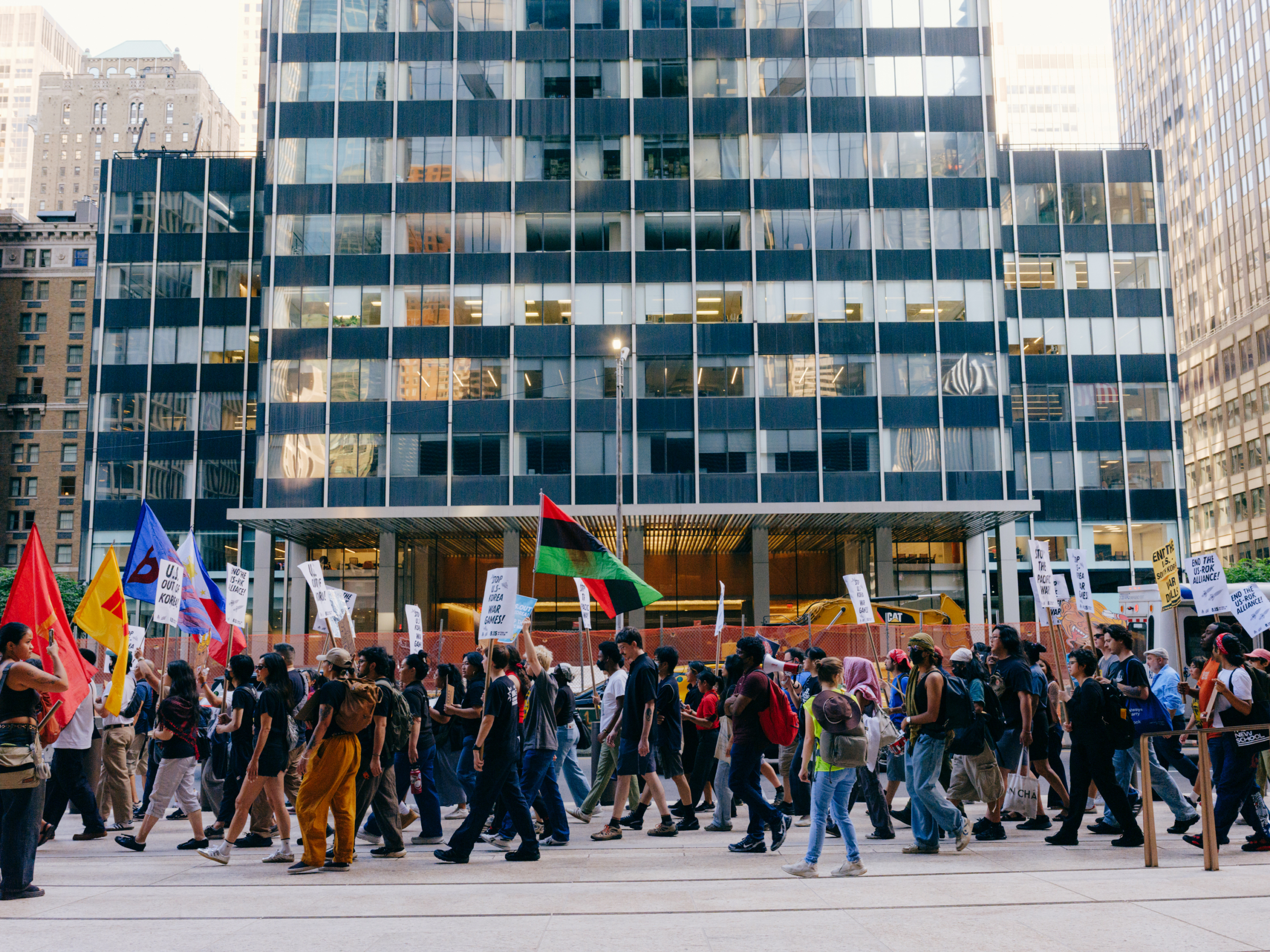
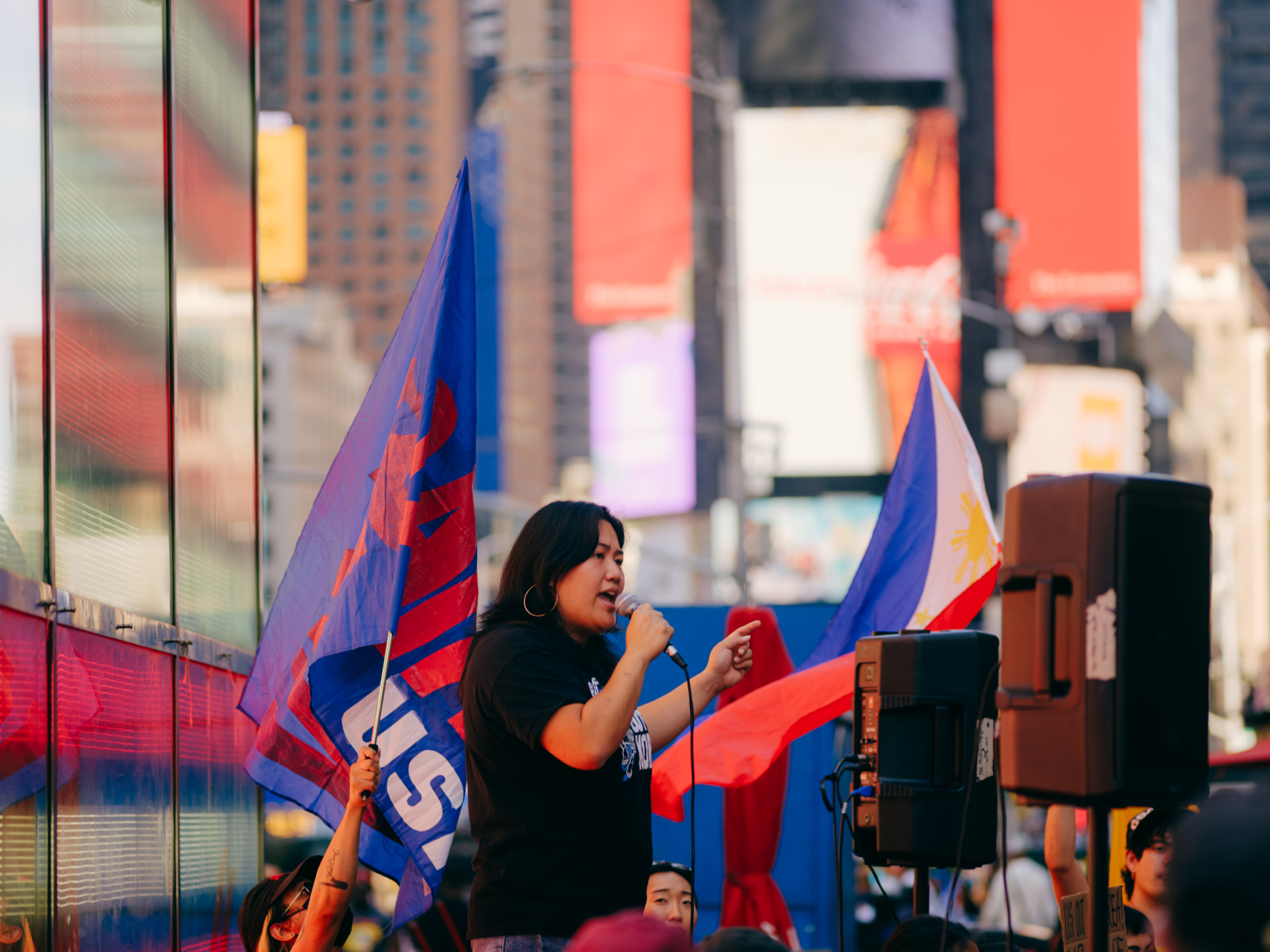
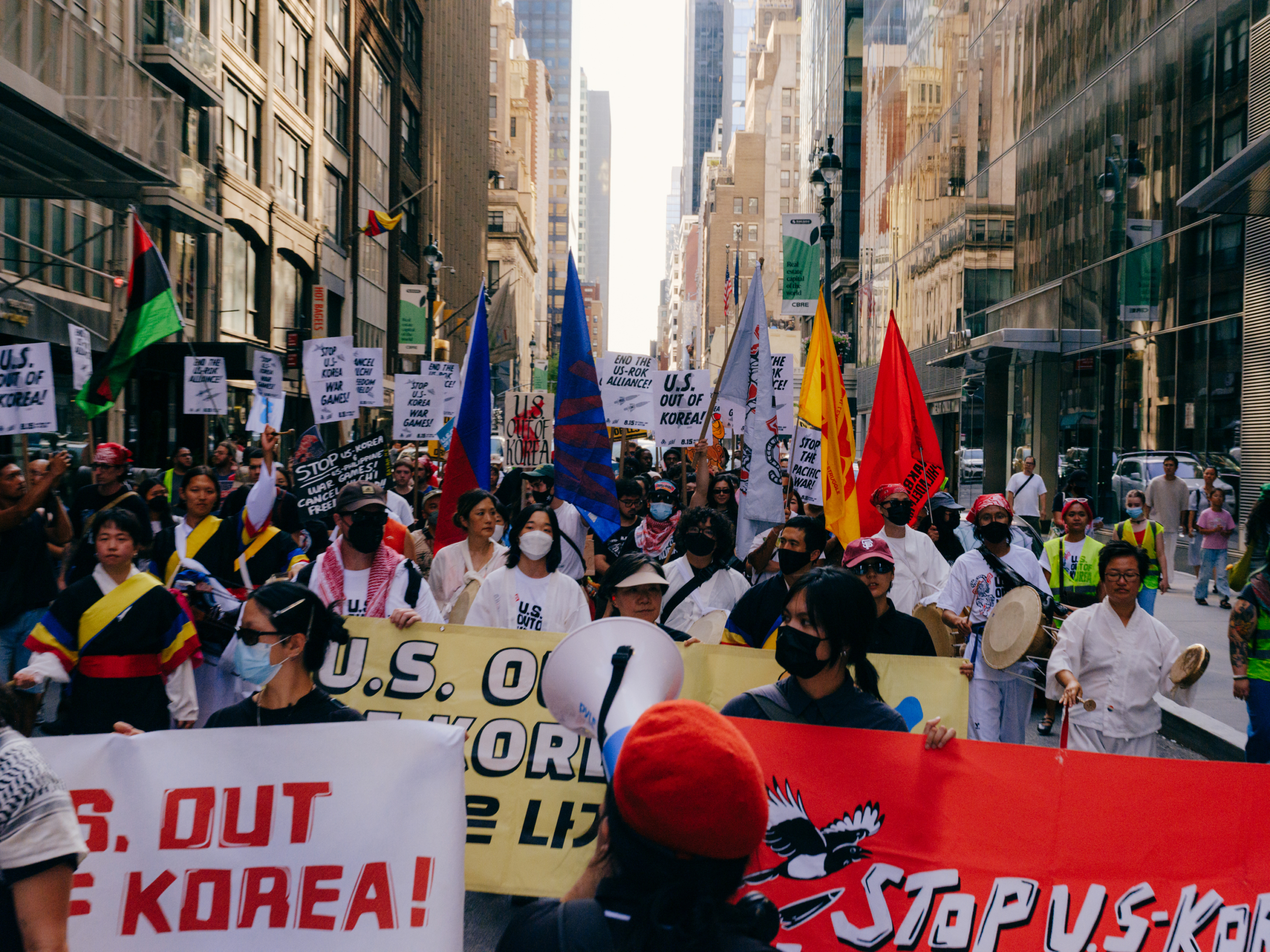
In New York City, 200 people gathered in Times Square to protest U.S. military presence in Korea and Ulchi Freedom Shield. Filipino activists denounced the U.S.-led Balikatan military exercises in the Philippines and a raid by U.S.-backed Philippine military forces which led to the deaths of two American citizens earlier this year. Attendees marched to the Philippine Center and ended at the office of Hanwha Asset Management, where protestors decried Hanwha Group’s role in bolstering economic ties between the U.S. and the ROK.
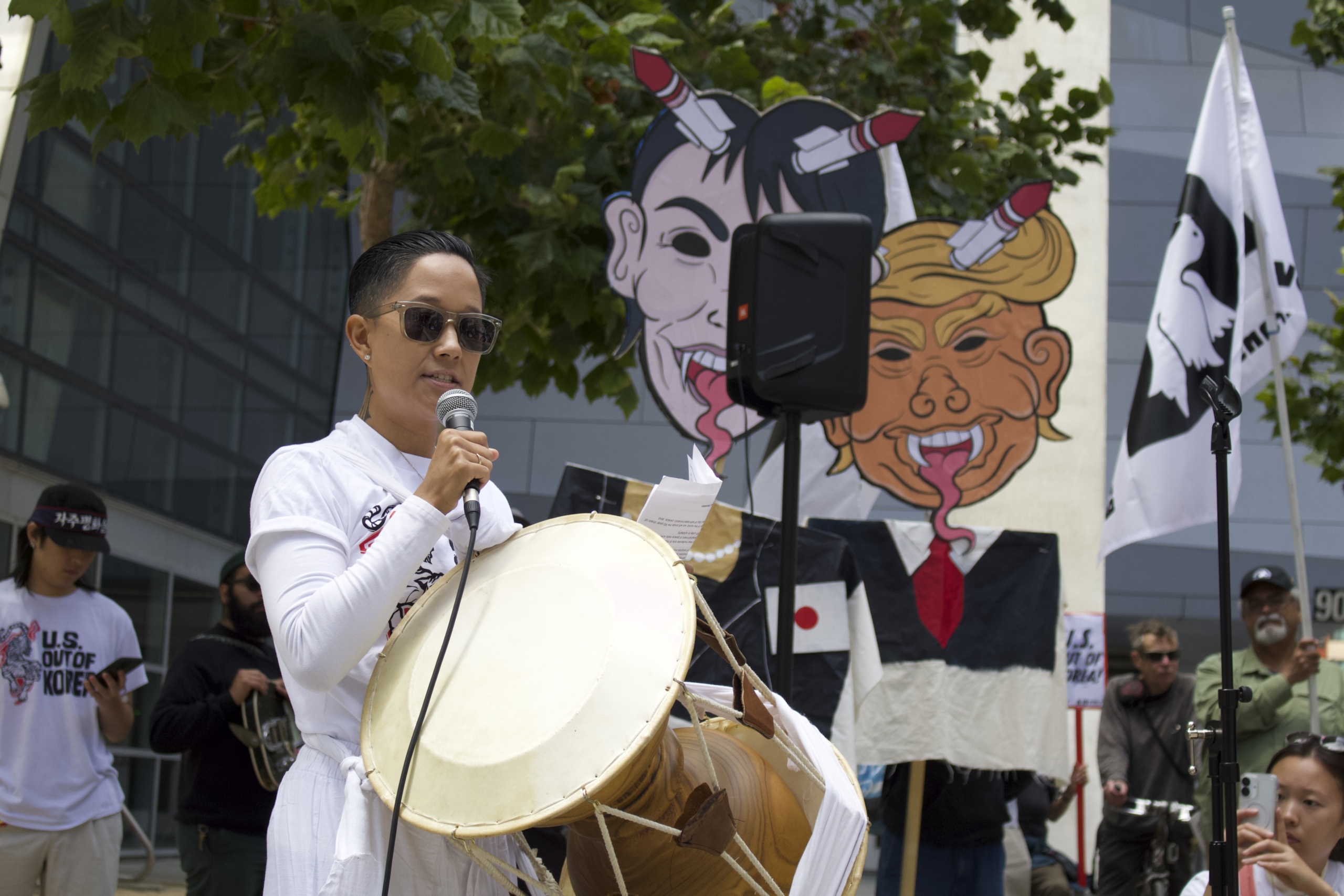
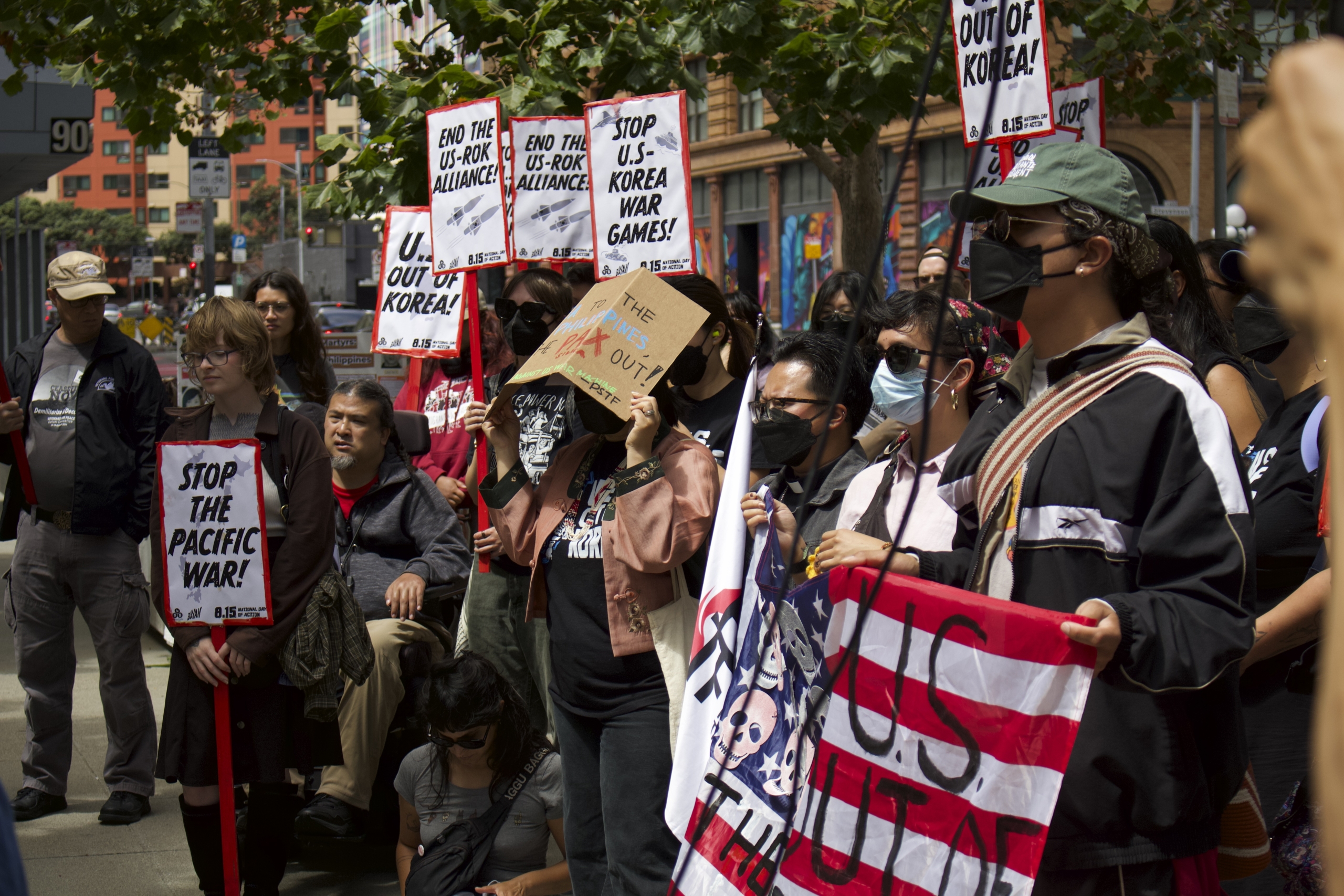
In San Francisco, 120 people gathered at the San Francisco Federal building. Protestors spoke against the impacts of escalating U.S. militarism across their homelands in Korea, the Philippines, and Palestine. Protestors condemned exorbitant U.S. military spending amid the local affordability crisis. The program was interspersed by various cultural performances with a Pungmul (traditional Korean drumming) troupe, a Filipino band, and an interactive traditional Korean protest dance. Attendees paid respect at an altar dedicated to martyrs killed for their anti-war and progressive activism.
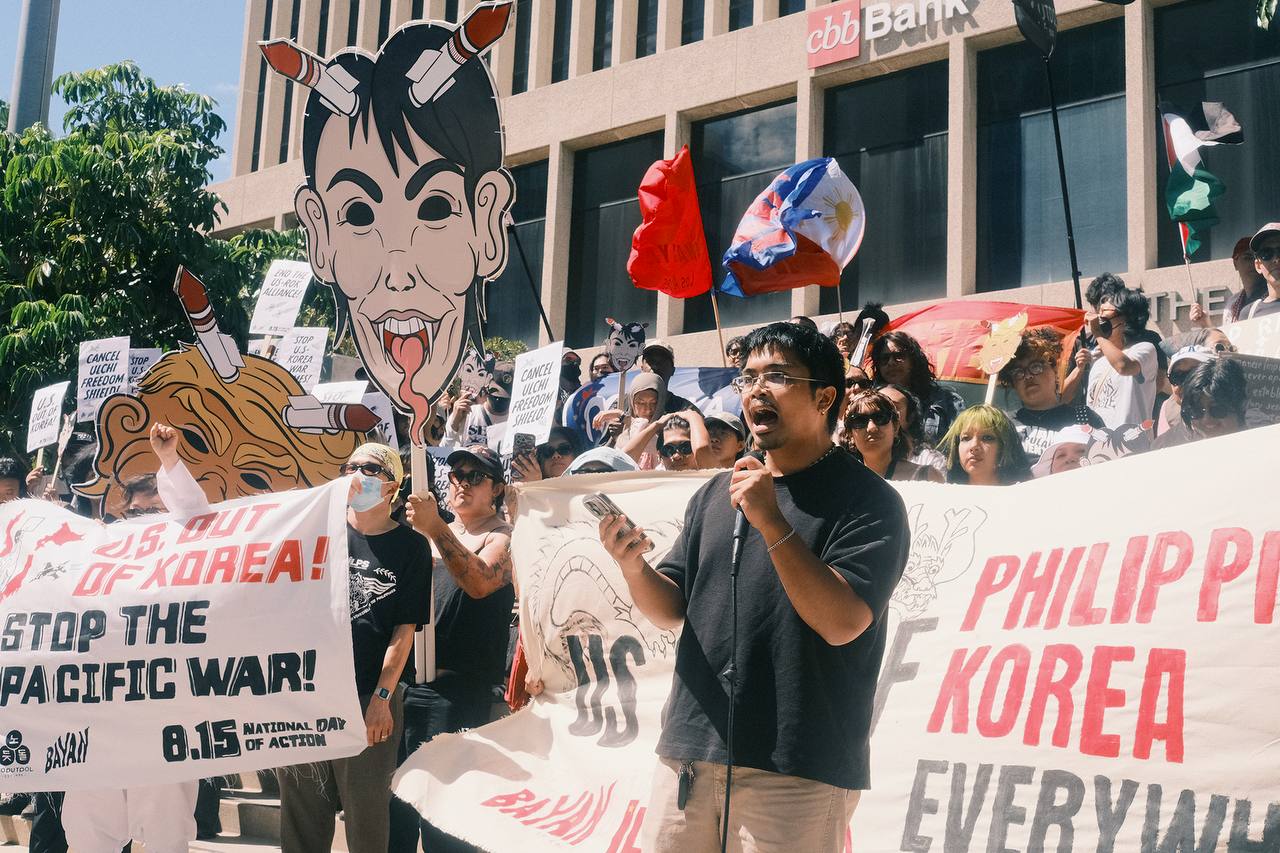
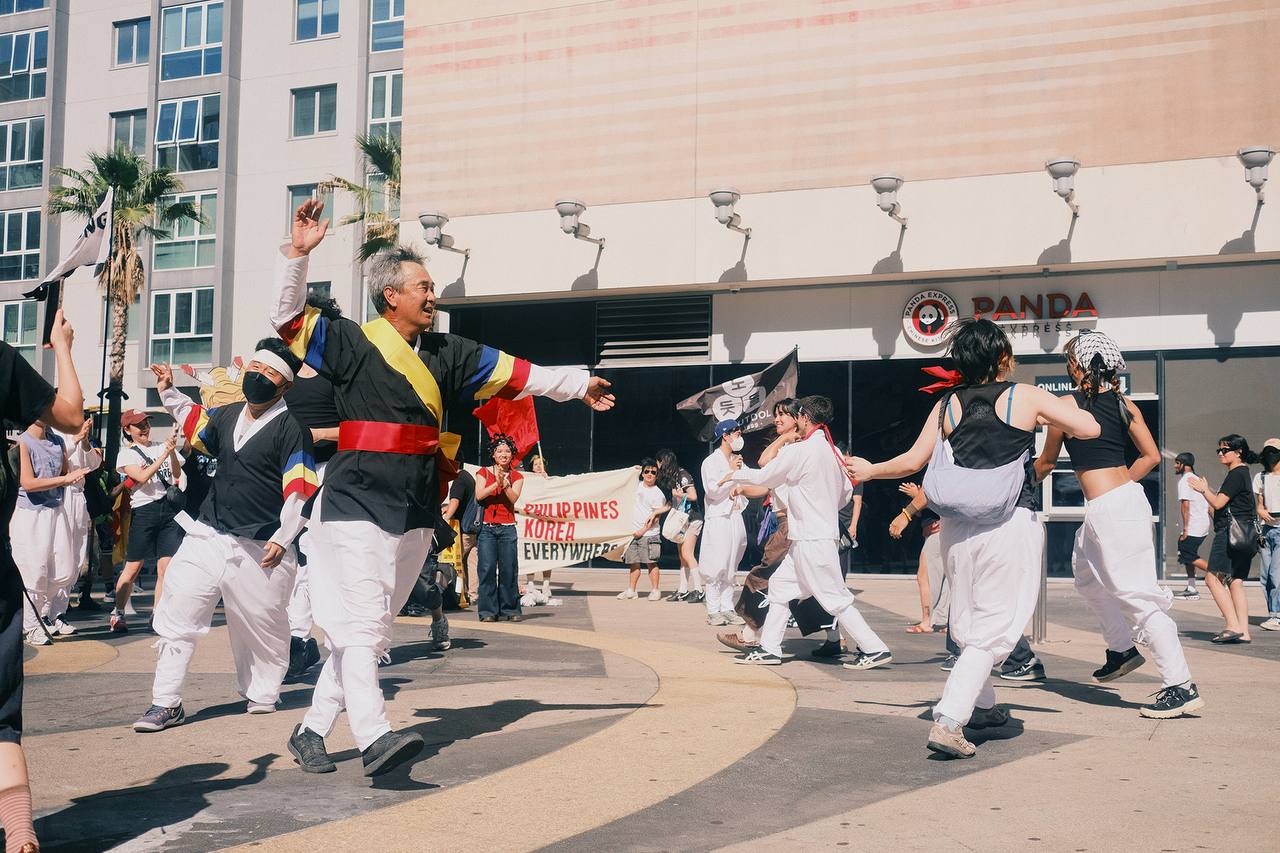
In Los Angeles, over 200 people gathered at the Wilshire/Western Metro Station in Koreatown to demonstrate opposition to U.S. military presence in Korea, the U.S.-ROK alliance and military drills, and provocative foreign policies such as the Pacific Deterrence Initiative. The demonstration included performances of traditional Korean drumming and dance. Attendees marched down Wilshire Blvd drumming and chanting “U.S. Out of Korea,” “U.S. Out of Philippines,” and “U.S. Out of Everywhere,” making stops at the Philippine and Korean consulates before concluding at the Wilshire/Vermont Metro Station.
In Seattle, 70 students, organizers, and community members gathered at the Fisher Pavilion in Seattle Center holding puppets of Donald Trump and Japanese Prime Minister Sanae Takaichi. They chanted “No boots on the ground, no bombs in the air, U.S. out of everywhere.” The rally featured a Pungmul (traditional Korean drumming) performance and a choir from the International Women’s Alliance, as well as speeches decrying U.S. imperialism in Korea, the Philippines, and Palestine.
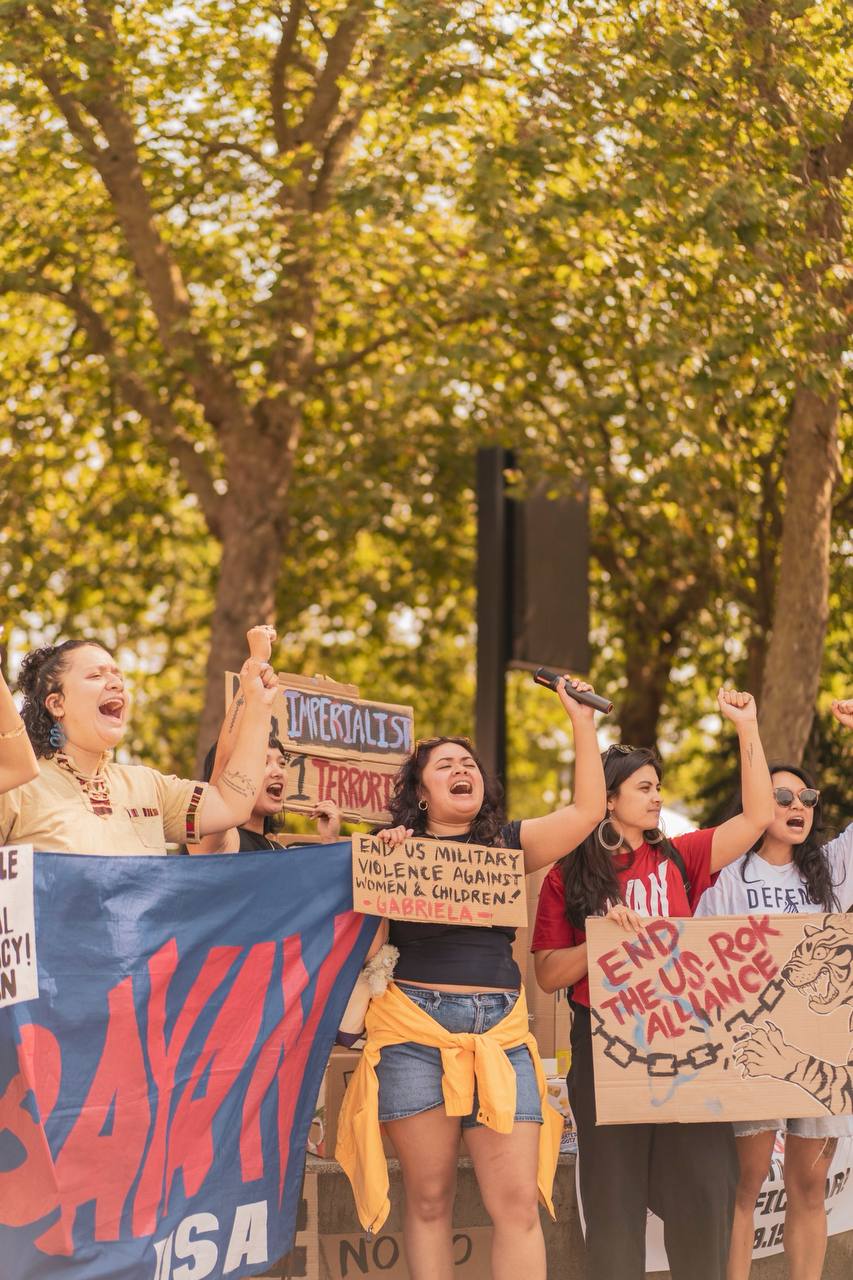
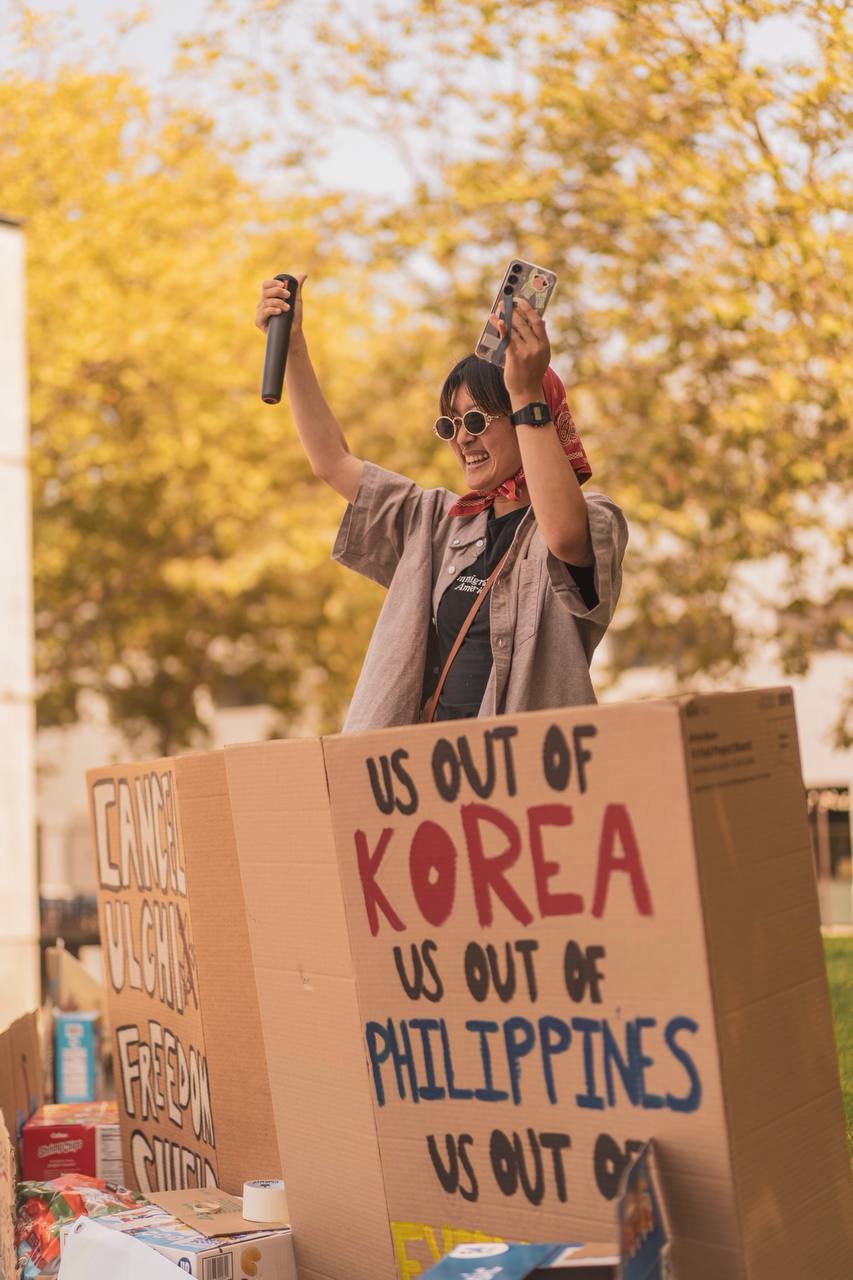
In Minneapolis, 30 people rallied in Minneapolis at Mayday Plaza. Protestors from Women Against Military Madness and the Minnesota Anti-War Committee spoke about their decades-long organizing against U.S. wars and foreign intervention. They highlighted the connection between U.S. activities in Palestine and the ROK. They demanded a shut down of all U.S. bases in Korea, an end to U.S.-Korea war games, and prevention of war in the Pacific.
Ulchi Freedom Shield is a major series of joint U.S.-ROK military exercises held in Korea every August. These military drills are a major source of tension on the Korean Peninsula. While the U.S. and ROK claim these exercises are defensive, they routinely bring tens of thousands of additional troops to Korea, and rehearse provocative maneuvers including the deployment of nuclear weapons and decapitation strikes against the Democratic People’s Republic of Korea (DPRK). These military drills are a major factor in the continued failure of diplomatic engagement with the DPRK.
In addition to their effects on regional security, U.S.-ROK military drills also inflict an immense human and environmental cost on the Korean people. Last spring, routine preparations for U.S.-ROK military drills led to the accidental bombing of the village of Nogok-ri in the city of Pocheon by the ROK Air Force. Eight 500-pound MK-84 bombs were dropped on Nogok-ri, resulting in hundreds of injuries.
On July 28, residents in the city of Pyeongtaek were evacuated from their homes due to a hazardous chemical leak caused by white phosphorus munitions stored at Osan Air Base, the largest U.S. Air Force installation in Korea. The use of white phosphorus munitions against civilians and population areas is banned under international law. On August 5, eight ROK university students were arrested after attempting to enter Osan Air Base in protest of the U.S. military.
Large-scale U.S.-ROK military exercises have been held annually since 1976 to prepare for war with the DPRK. In recent years, the Pentagon has used joint exercises to set the stage for war with China. As revealed by the ROK media outlet Chosun Ilbo, the U.S. Pacific Command has been deploying the Army’s Multi-Domain Task Force to Korea for military drills since 2025. The Multi-Domain Task Force is a combined fighting force that brings together all branches of the Armed Forces, and was specifically created to prepare for military confrontation with China. These revelations demonstrate that the U.S. is now using military drills in Korea in preparation for a wider regional conflict.
In light of this, the U.S. Out of Korea campaign is calling for the cancellation of Ulchi Freedom Shield, and the end of U.S. military aggression on the Korean Peninsula and in the wider Asia-Pacific Region.
Miyeon Jang, Nodutdol for Korean Community Development said, “Billions of people in the Asia Pacific are confronting the U.S. as it brings its war of aggression to their shores and villages. For many Koreans in the U.S., our migration was shaped by the same U.S. driven militarization and economic extortion that imposed destabilization of our homeland. Today, the U.S.’s imperialist ambitions remain the engine driving tensions and threatening peace in Korea and the broader Pacific. We refuse to mistake occupation for stability or endless war games for diplomacy, and stand with our kin in Korea demanding an end to U.S. militarism and occupation of Korea!”
Rachel Kim, Haebang Collective said, “I have family who survived Japanese colonization in Korea, and who later survived the bombings dropped indiscriminately by the U.S. military in northern Korea at the start of the Korean War. August 15 is meant to be a day to celebrate an end to brutal Japanese occupation, but we cannot celebrate if our homeland continues to be divided, occupied, and used – in the U.S. Army’s own words – as a ‘fixed aircraft carrier’ for war by the U.S. It is my duty to raise my voice here at this action alongside thousands of Koreans in South Korea who are calling for an end to the U.S. occupation.”
Liz McLister of Families Against Military Madness and the Minnesota Peace Action Coalition said, “Minnesota stands in unwavering solidarity with the people of Korea in their ongoing struggle against U.S. occupation, war games, and plunder. As avowed anti-imperialists we demand justice for the millions of Koreans who’ve been killed, displaced, and terrorized by our government for 81 years and counting. U.S. out of Korea! U.S. out of EVERYWHERE!”
Nieves Delgado of BAYAN-USA said, “As Filipinos, we oppose the Freedom Shield exercises because our homelands in the Asia-Pacific are NOT unsinkable aircraft carriers in the Pacific, contrary to what Trump may call the Philippines and Korea. Our people deserve to live peacefully in our motherlands without threat to our national sovereignty. Between Liberation Day and Bonifacio Day, the Ulchi Freedom Shield Exercises and the Balikatan Exercises, the Filipino and Korean people descend from long legacies of resistance against foreign powers. We link arms with our Korean siblings against the U.S.-led war in the Pacific and are in solidarity with all peoples resisting US imperialism.”
Press Inquiries: media@nodutdol.org